Born in Johannesburg, raised in Klerksdorp, South Africa
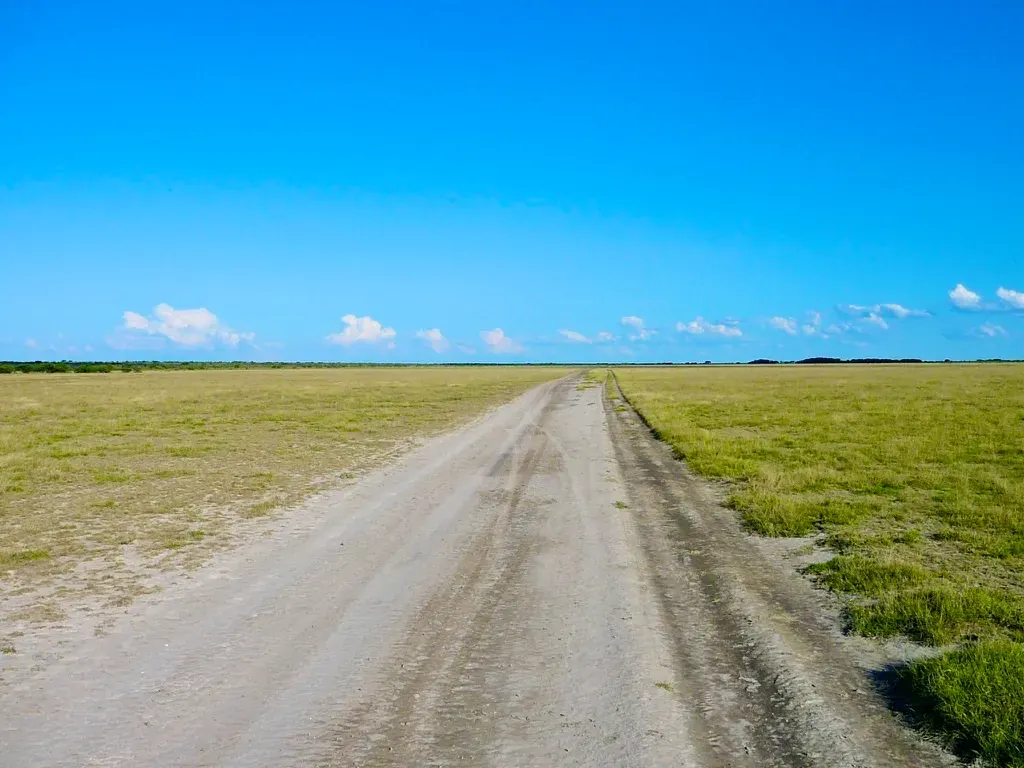
Born at a hospital in Johannesburg to parents already living in Klerksdorp — a small mining town in what was then the western Transvaal. Gold country. The landscape — flat, vast, heat-hazed — would become a metaphor for everything that followed.
1969 · World
Moon Landing
Neil Armstrong walks on the moon. The world watches on television sets that most South African households do not yet own.
1970s
1970s
A house of argument and tolerance
Growing up in a home where debate was the dinner table sport. Ideas were tested, not accepted. The habit of questioning everything — including the world outside the window — started here.
1976 · World
Soweto Uprising
Students in Soweto march against Bantu Education. Police open fire. The image of Hector Pieterson becomes the icon of a generation's refusal. For a child growing up white in a mining town, the distance between Klerksdorp and Soweto was geographic, not moral.
~1987
~1987
University of Cape Town — Bachelor of Business Science
Studies Business Science at UCT. Elected to the Student Representative Council. The campus is a crucible — anti-apartheid politics, intellectual ambition, and the question of what a young South African owes the country he was born into.
1989
1989
Detained for protesting apartheid
Conviction before consensus. As a white South African in the late 1980s, the comfortable path was to look away. Damelin couldn't. He was uncomfortable with the prejudice and the rules that worked against the majority — and he wasn't a passenger. He helped organise demonstrations against the apartheid government's practice of detention without trial, and was detained at one of them. The clearest memory from that day: the hatred in the eyes of the policemen, and the German Shepherds — trained to terrorise — lunging at the crowd. The willingness to put short-term comfort aside for a battle worth fighting crystallised here. It never left.
1989 · World
Fall of the Berlin Wall
The wall falls. The Cold War ends. In South Africa, the dominoes begin to move.
1990 · World
Mandela Released
Nelson Mandela walks out of Victor Verster Prison after 27 years. For South Africans who had marched and been detained, this is the moment the world tilts.
1992
1992
Leaves South Africa
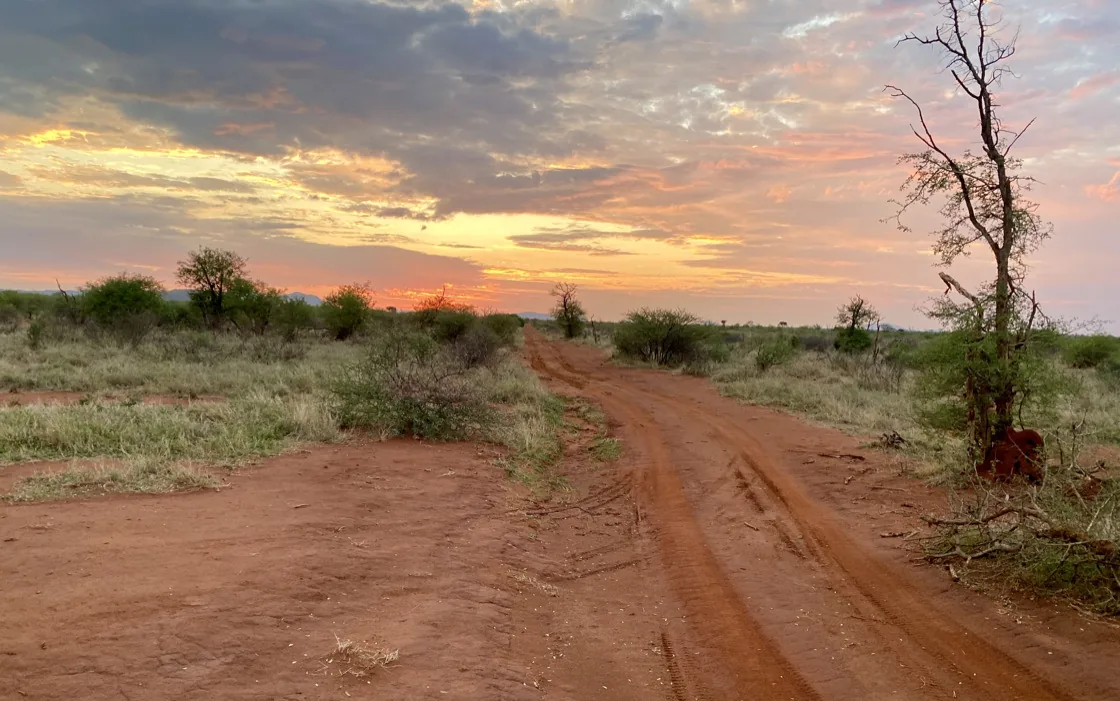
South Africa was on the cusp of real change, but Cape Town — pre-internet — felt disconnected from the rest of the world. The pull was outward: to connect, to test himself against the best. He didn't think he could do that from South Africa. It was running towards something, not away from it. He still loves the smell of the bush — the salty Atlantic pounding the rocks at Bantry Bay, the vast Kalahari silence, the light of the Cape. His happiest place is still the African wilderness, self-driving through Botswana, grounded in who we really are. The disconnection gives him his best thinking time. South Africa remains one of his homes. But the world was bigger than one country, and he needed to find out how much of it he could reach.
II1992–20052 min
The Builder
1992
1992
Moves to Israel
Israel: a country that builds with urgency — small, surrounded, perpetually reinventing itself. For a South African who had just watched one country transform, Israel felt like another place where nothing was settled and everything was being built. Israel becomes, alongside South Africa and Britain, one of the three countries that define him.
1993–94
1993–94
Combat service — Israeli Army
Serves in the Israeli Defence Forces. A South African immigrant in his early twenties, in a country not yet at peace. Real combat teaches you things nothing else can — how to function under genuine pressure, how to trust the people beside you, how to make decisions when the stakes are not theoretical. The resilience and clarity that came from military service never left.
1995
1995
Master's degree — Boston University / Ben-Gurion University
Completes an MS in Management through the joint Boston University / Ben-Gurion University programme, physically based in Israel. Simultaneously begins working in investment banking.
1995–97
1995–97
YLR Investment Management
Three years at YLR Investment Management, focused on financing the emerging Israeli technology sector. This is where the instinct for building starts to replace the instinct for studying — seeing founders up close, understanding what makes technology companies work from the inside.
1997
1997
Barzelan — first venture
Joins a start-up to help build Barzelan, a high-tech steel wire manufacturing company in Beit Shemesh, Israel. Factories, physical logistics, raw materials, supply chains, inventory, and sales. Before fintech, before software — the first venture was built with metal.
1999
1999
Moves to London
Supply Chain Connect and its founder moved to London — to be close to customers, to build the centre of the business somewhere he could understand the market deeply. London had always been a great global city, and when the opportunity came to build there, he jumped at it. Fourth country. Another continent, another chapter.
2000 · World
Dot-Com Bust
The bubble bursts. Billions evaporate. For a software company just getting started, survival meant something specific: keeping the business funded when the European VC ecosystem virtually shut down, holding the team together, finding customers willing to pay real money for real software while the dot-com wreckage was still smouldering. The lesson carried forward: real businesses outlast stories about businesses.
2000
2000
Supply Chain Connect founded
Founds Supply Chain Connect, a hosted, cloud-based supply chain software company and B2B marketplace for industrial procurement. The idea: bring transparency, efficiency, and automation to a world still running on fax machines and phone calls. Built from London during the dot-com bust.
2001 · World
September 11 Attacks
The towers fall. The world divides into before and after.
2005
2005
First exit — Supply Chain Connect sold
Supply Chain Connect is acquired by ChemConnect. First company built, first company sold. The cycle of building something from nothing and letting it go begins.
III2006–20134 min
The Fintech Revolution
2006
2006
Wonga founded
Founds Wonga — born from a conviction that the traditional finance industry was built on outdated assumptions, prejudicing many people. Credit decisioning was still dominated by bank managers who tended to be white and middle-aged, implicitly prejudicing those who weren't. Damelin believed that by 2005 there was enough data and alternative information available that machines could make less prejudiced, more consistent, and more appropriate decisions than humans for many purposes. The insight was the basis for what became the world's first real-time AI system in consumer credit — already in place from the moment Wonga went live in 2007. A pioneer in the use of artificial intelligence in financial services, before the term existed in the mainstream. Founding Wonga wasn't disconnected from his journey as a South African: the company built a decisioning system focused on repayment probability rather than on what a person looked like, sounded like, or where they came from.
Global Financial Crisis
2008 · World
Lehman Brothers collapses — Global Financial Crisis
The global financial system seizes. Banks that were too big to fail do exactly that. Wonga, born in the middle of the crisis, grows profitably as trust in traditional finance collapses — funded, profitable, and expanding while almost every finance business worldwide was on the brink of collapse.
2009 · World
Bitcoin Genesis Block mined
Satoshi Nakamoto mines the first Bitcoin block. A new financial system begins to emerge in the margins.
2009
2009
Wonga surpasses 100,000 loans
Scale. The automated lending model proves out. What started as an experiment becomes infrastructure.
2010–11
2010–11
Recognition
Named TechCrunch Founder of the Year (2010), Guardian Digital Entrepreneur of the Year, and Ernst & Young UK Entrepreneur of the Year (2011).
2012
2012
Introduced to Bitcoin
Introduced to Bitcoin by Wences Casares — the Argentine entrepreneur who would become known as 'Patient Zero' for bringing crypto to Silicon Valley. The main point of Bitcoin wasn't its price as an asset. It was freedom from human decision-making — the same theme that had pushed him to create Wonga. At Wonga, artificial intelligence made better credit decisions than humans. With Bitcoin, the source code and white paper — which he studied in depth — meant that the distribution of Bitcoin and the safety of the network were predicated on software, mathematics, and cryptography, not on human emotion. The network is global, inclusive, and available to anybody anywhere. His South African roots and growing up with apartheid gave him the basis to understand the importance of systems that were truly inclusive and not dependent on human vagaries, emotions, and prejudice. Much like his friend Wences had experienced in Argentina with the degradation of people's economic freedoms through multiple governments' intervention in the economy, in South Africa, capital flow restrictions and massive currency depreciation were part of how they had both grown up. It made it easy to understand the problems that Bitcoin could solve: democratic wealth and economic freedom for everyone, everywhere. To this day, he considers it one of the greatest human inventions.
2013
2013
Steps down from Wonga
Wonga grew from launch to over $500 million in annual revenue in five years — a run-rate above $500M when Damelin resigned as CEO in November 2013. The company was generating over $100M in annual cash flow, with a customer Net Promoter Score of 73 — in Apple and Google territory, ahead of every bank in the UK. The business had built the world's first real-time AI system in consumer credit, and customers were responding accordingly. Internally, the business was strong. Externally, two forces made it impossible to build the broader financial technology platform he envisioned: a board split between those who wanted to invest in new markets, new products, and internationalisation — and those focused on near-term financials and an IPO. Compounding this was regulatory friction from authorities who didn't yet understand the product, its AI-driven decisioning, or its customers. Something had to give. A large secondary share sale resolved the impasse, and Damelin moved on. What followed was a very different strategy — narrowing geographies, retreating from product ambition, shutting down the proprietary risk model and team, replacing the custom technology platform with off-the-shelf software, and reallocating investment from data science and technology to regulatory compliance. There was turnover of almost the entire team as a consequence, and it unfortunately didn't end well. The lesson stayed: a great product and great customers aren't enough. Without a unified board and a clear strategic mandate, even the strongest business can be pulled apart from within.
Wonga — annual revenue (USD, approx., 2008–2018)
Wonga grew from launch to over $500M in annual revenue in five years, while almost
every other finance business worldwide was on the brink of collapse during the
2008–09 Global Financial Crisis. Errol resigned in November 2013 at the company’s
revenue peak. Source: Wonga Group Limited filed accounts (Companies House, UK).
Wonga Group Limited annual revenue, USD, 2008-2018. Source: Companies House (UK).
Year
Revenue (USD)
Phase
2008
$25M
Errol Damelin's tenure
2009
$28M
Errol Damelin's tenure
2010
$115M
Errol Damelin's tenure
2011
$295M
Errol Damelin's tenure
2012
$490M
Errol Damelin's tenure
2013
$510M
Errol Damelin's tenure
2014
$355M
Post-departure
2015
$120M
Post-departure
2016
$100M
Post-departure
2017
$85M
Post-departure
2018
$55M
Administration
Errol Damelin resigned as CEO in November 2013, at the company's revenue peak of $510M.
A pattern that would define the next decade: build something meaningful, push it as far as it will go, then step back. Decompress. Open the mind to what comes next. Make good decisions, not fast ones. During this period of reflection, two things emerged. The first was the concept for Tide — which would become another billion-dollar business. The second was the realisation that investing, backing other builders at the earliest stage, was not a side project. It was the next chapter.
~2014
~2014
Rhythm Ventures
Formalises the investing practice under the Rhythm Ventures banner. The precursor to Dust Road Ventures — same instinct, same approach, earlier chapter.
2014
2014
Full-time investor
Begins writing seed-stage cheques full-time. The operator becomes an investor — but the instinct is the same: find people building things the market doesn't yet know it needs, and back them before the road is paved.
2015
2015
Tide co-founded
Co-founds Tide, a digital banking platform for small businesses. The third company. Conceived during the interregnum, built into another billion-dollar business. Proof that the builder's instinct doesn't retire — it finds new problems.
2016 · World
Brexit Referendum
The UK votes to leave the European Union. The tectonic plates of European politics shift.
2020 · World
COVID-19 Pandemic
The world stops. Companies built for digital thrive. Companies that weren't, don't.
2021
2021
Wise and Cazoo go public
Wise lists on the London Stock Exchange. Cazoo lists on the NYSE. Two portfolio companies reach the public markets.
2023 · World
Hamas attack on Israel — 7 October
The worst attack on Jewish civilians since the Holocaust. For someone with deep roots in Israel — one of the three countries that define him — this is not a news event. It is personal.
2024 · World
Bitcoin breaks $100,000
Fifteen years after the genesis block, Bitcoin crosses $100,000. Twelve years after Wences Casares first introduced the idea, the thesis has played out.
2024
2024
Dust Road Ventures
The investing practice is formalised as Dust Road Ventures — a seed-stage investment firm deploying permanent private capital. The name comes from the roads of southern Africa: unpaved, uncertain, and the only way to get somewhere no one has been.
V2026–1 min
What's Next
2026–
2026–
The current chapter
A new venture is taking shape — solving a pain point that most people don't know exists yet. AI has opened paths that weren't previously possible, and the feeling is one Damelin recognises: the same charge he felt in 1994 when he was first introduced to the internet and fell in love with the global connectivity and the opportunities to connect people everywhere. He has never been more excited about building. The portfolio is deepening. The writing is starting. The story isn't over. It's accelerating.